To clean a garbage disposal, cut the power first, then scrub the rubber splash guard and lift out any stuck bits with tongs, never fingers. Pour in half a cup of baking soda, wait half an hour, add a cup of vinegar, and rinse after a few minutes. With the power back on, grind two cups of ice and a cup of salt under cold running water, then finish with citrus peel for the smell. Weekly if you use it daily, monthly otherwise. Keep chemical drain cleaners and bleach out of it.
Before anything: the power and your hands
This Old House’s garbage disposal cleaning guide calls the first step “the most crucial”: cut the power, either by pulling the plug, “typically connected to an outlet under the sink”, or at the breaker. Then it adds the check that makes the step real: “Always double-check that you disconnected the right circuit by attempting to turn on the garbage disposal before starting to clean it.”
The hand rule is just as firm: use “tongs or pliers to reach into the disposal and remove the food pieces. Never use your fingers to do this.” In a house with children, the switch for the disposal is worth a look too. If a small person can reach it from a step stool, that is the week to move the step stool.
A word on blades, because the folklore depends on them. InSinkErator, the maker, says in its cleaning guide that its disposals “don’t have blades”: they “use impellers to push food waste against a grindshear ring that shreds it like a cheese shredder.” Other brands vary. Either way, nothing in there is safe for fingers, power or no power.
What you need
- Half a cup of baking soda and a cup of white vinegar
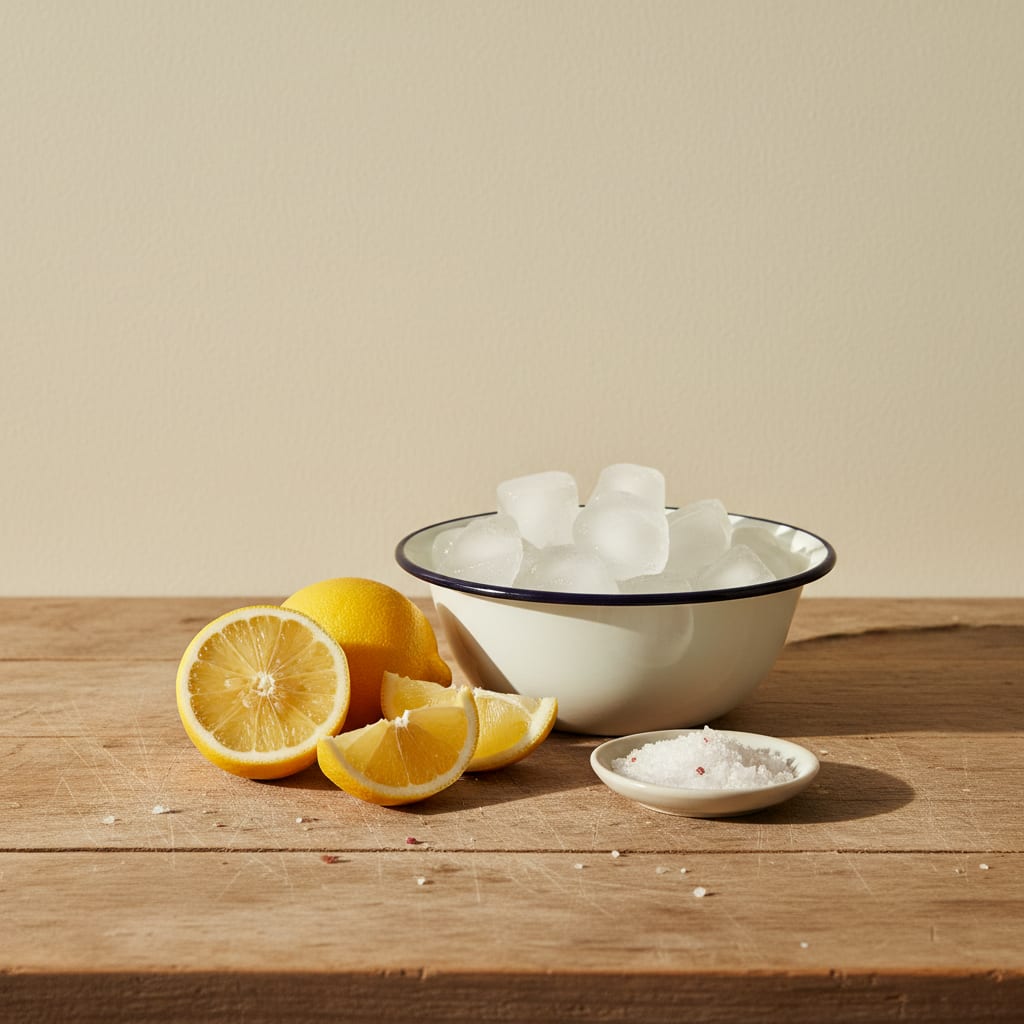
- Two cups of ice and a cup of table salt
- One lemon or orange, cut into wedges, or a handful of peel
- Tongs and a flashlight
- An old toothbrush and dish soap, or a long-handled disposal brush such as the Mr. Scrappy universal disposal brush
Step 1: Scrub the splash guard
The rubber flaps at the top of the drain catch grease and food in every groove. This Old House says to pull the splash guard out if it lifts out and “thoroughly clean it with an old toothbrush or scrubbing brush and dish detergent”, paying “particular attention to the underside”. InSinkErator’s Evolution models have a removable baffle: “pull it out, rinse it off, and wipe it clean.” If yours does not lift out, fold the flaps back and scrub them in place, power still off.
This is the step that does most of the work against the smell. The underside of that rubber is usually the source of it.
Step 2: Look inside and lift out debris
With the guard out and the power still off, shine a flashlight down the drain. Anything stuck comes out with tongs or pliers. Spoons, bottle caps and fruit stickers all turn up here.
Step 3: Baking soda, then vinegar
This Old House’s deodorising step: “Measure half a cup of baking soda and pour it into the disposal. Let it sit for half an hour.” Then “pour in 1 cup of vinegar”, let the foam work “for about three minutes”, and rinse. The power stays off for this; it is a soak, not a grind. The same two boxes cover a lot more of the house in baking soda cleaning and cleaning with vinegar.
Step 4: Ice and salt
Put the splash guard back and restore the power. This Old House: “pour in 2 cups of ice. Add 1 cup of salt on top of that, run the cold water, and turn on the disposal. Let it run until all the ice has been ground up.” The ice and salt scour the grinding parts as they break up.
InSinkErator is more modest about it: ice “can still be used to clean the disposal grinding components”, but it “will usually melt before it cleans the grind chamber completely.” So the ice is a scrub for the parts it touches, and the splash guard and the soak are doing the rest. Keep it on the card, just do not expect it to sharpen anything.
Step 5: Citrus to finish
InSinkErator’s odour method: cut a lemon or orange into wedges, “turn the disposal on and put the wedges down one at a time along with a steady stream of cool water.” It says the rinds “will help to clean the grind components while the citrus scent will provide a fresh smell.” This Old House uses the peel of one fruit the same way.
Run the cold water for a while afterwards. This Old House suggests leaving it on “for up to 20 seconds after turning off the device” every time you use the disposal, to carry the bits away.
Keep these out of it
This Old House says natural ingredients are best “as chemical cleaners can corrode its metal parts”. So no chemical drain cleaner, and no bleach poured in on top of a vinegar soak: vinegar and bleach together release chlorine gas.
Cold water, not hot, when it is grinding. This Old House says hot water “will liquify grease and fats, and these could then stick to the blades”. A hot rinse with the disposal off, after the soak, is fine.
This is not a guide to what to eat or how to store food, only to what the machine can grind. This Old House’s list of things that should not go down includes:
- grease, fat and oil
- coffee grounds and eggshells
- fibrous vegetables and large amounts of peel or fruit
- starchy foods such as pasta, rice and bread
- shellfish and seeds
- anything that is not food, including spoons, coins and rings
Its plumbing expert’s own culprit: “in my house it is always a spoon.”
No disposal. Peelings went in the compost pail by the back door, and the drain got boiling water and a fistful of baking soda on Fridays.
Splash guard scrubbed every Friday kitchen day. Baking soda, vinegar, ice and salt on the first Friday of the month, and the lemon ends from the week go down last.
How often to clean a garbage disposal
This Old House: “If you use the garbage disposal every day, consider cleaning it once a week. If you don’t use it as often, you could get away with a monthly cleaning.” It adds the signal to go sooner: bad smells or unusual noises.
| Job | How often |
|---|---|
| Cold water during and after use | Every time |
| Scrub the splash guard | Weekly, Friday kitchen day |
| Baking soda, vinegar, ice and salt | Weekly with daily use, else monthly |
| Citrus wedges | Whenever it smells |
The dishwasher on the same drain line gets its own monthly filter clean in how to clean a dishwasher.
FAQ: cleaning a garbage disposal
Does ice sharpen garbage disposal blades?
No. InSinkErator says its disposals have no blades, only impellers and a grind ring. Ice helps scrub the grinding parts but usually melts before it cleans the whole chamber.
Can I put bleach in a garbage disposal?
Keep it out. This Old House says chemical cleaners can corrode the metal parts, and bleach must never meet the vinegar from the soak step.
Why does my garbage disposal still smell after cleaning?
Usually the underside of the rubber splash guard. Scrub it with dish soap and a brush, power off, then grind citrus wedges with cold water.
Is it safe to reach into a garbage disposal?
No. Cut the power, check it is really off, and use tongs or pliers. This Old House says never to use your fingers, even when it is not moving.
Sources loaded and read on 2026-11-23: This Old House, How To Clean a Garbage Disposal (200, 237KB); InSinkErator, How to Clean Garbage Disposal 3 Ways (200, 60KB).
More cards under Old-Fashioned Methods in the file.