An old cast-iron radiator can stay in a child’s bedroom, but it needs three things sorted before the heating season gets going. First, the surface: a steam radiator runs hot enough to burn skin, so cover it and lag any bare pipes. Second, the bed: move the crib or bed well away from it, so no child can be pinned against it or reach it from the mattress. Third, the noise: a banging steam radiator is usually trapped water, and a level check and a fully open valve often quiet it. Then aim the room at about 68 to 72°F.
Steam or hot water: find out which you have
It changes how careful you need to be. The CDC’s report on radiator burns among children in Chicago says plainly that “hot water radiators operate at a lower temperature than steam radiators and present a lower risk for thermal injury.” The steam systems in that report ran at 180 to 230°F (82 to 110°C).
Two quick ways to tell, from the radiator itself:
- A steam radiator on a one-pipe system has a single pipe and valve at one end and a small air vent on the side opposite the valve. That vent is the hiss you hear as the heat comes up. This is the setup This Old House describes in its guide to quieting a banging steam radiator.
- A hot-water radiator usually has pipes at both ends, and a small bleed valve near the top that takes a radiator key.
If you are not sure, whoever services your boiler will know at a glance. Book that visit before the cold weather, as the furnace replacement card explains.
The hot surface: covers and pipe lagging
The CDC report is short and sobering. Ten children were treated at one Chicago clinic for burns from home radiators in about two and a half years. It notes that “children’s skin is probably more susceptible than that of adults to thermal injury.” A 2021 study from a UK burns centre, in the Annals of Burns and Fire Disasters, found that children under five made up the largest group of radiator burn patients, and that they “were significantly more likely to sustain burns due to accidentally grabbing radiators.” Mostly these were small burns to the hands, from toddlers using furniture to pull themselves up.
The CDC’s prevention line is the card: “Risks for burns from home radiators can be reduced by keeping the unit covered and the pipes insulated.” The UK study recommends the same thing in its own words: protective casings, and moving beds away from radiators. In practice:
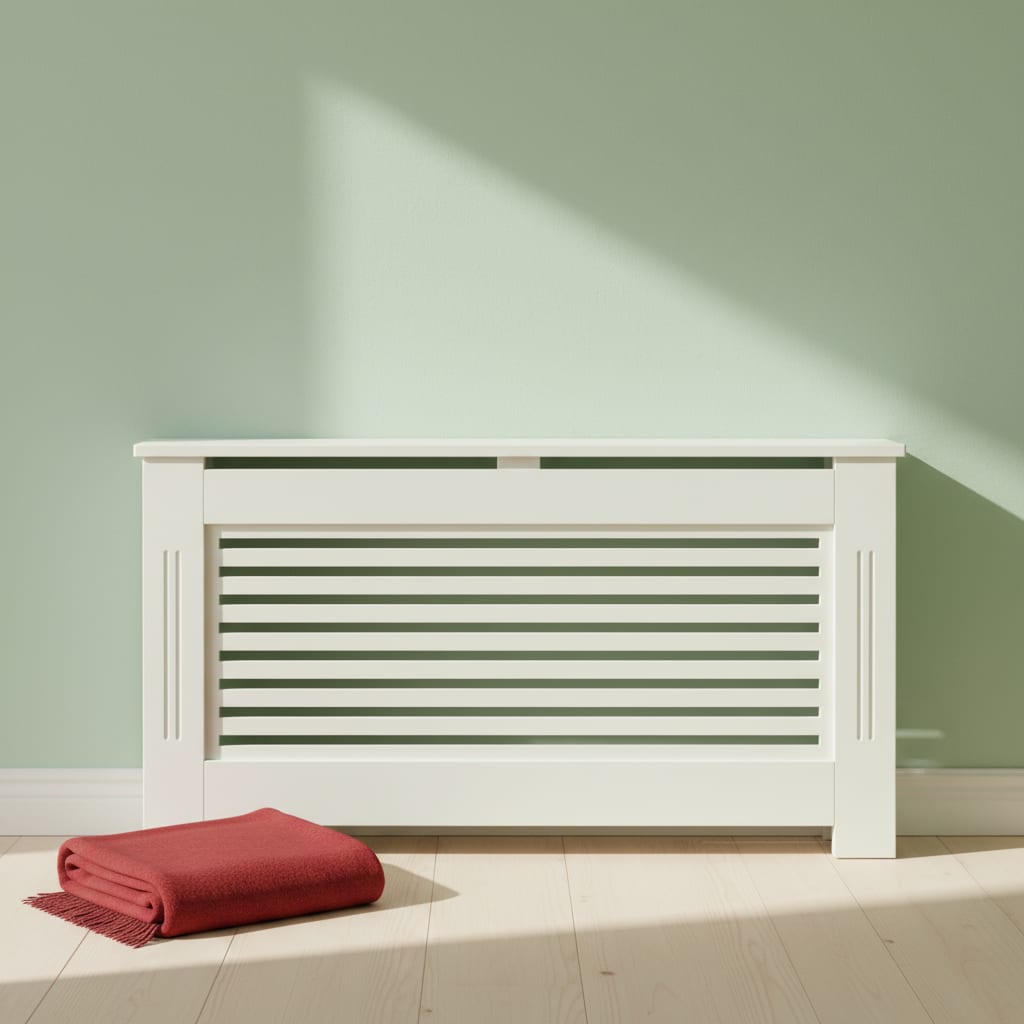
- A vented radiator cover. A cabinet with an open grille or slotted front lets the heat out while keeping hands off the iron. A snap-together vented one such as the Ready Covers steam radiator cover does the job. Measure the radiator’s length, height and depth before you buy, and leave the valve and the air vent reachable.
- Lag the bare pipes. The pipe rising through the floor gets as hot as the radiator and is at exactly toddler-hand height. A plumber or the hardware store can match pipe insulation to its size.
- Keep fabric off it. Children’s Hospital of The King’s Daughters (CHKD) says to keep flammable materials away from heaters and radiators. So no drying socks on top, no blanket over the cover, and no curtains hanging onto it.
The bed and the crib: move them away
This is the part of the CDC report that stays with you. Two of the children, aged 10 months and 31 months, “became trapped between a bed and a steam radiator,” and one was hospitalized with full-thickness burns. CHKD’s burn-prevention advice is direct: “Never leave an infant in a crib close to radiators or space heaters.”
In an old house the radiator sits under the window, and the bed often ends up beside it. Move it:
- The crib goes on a different wall. Nothing in reach of the bars, with no gap a child can slip into. Inside, a baby’s sleep space stays bare and flat: a firm fitted mattress, no pillows, no loose blankets.
- A toddler or big-kid bed goes far enough off that a child cannot roll or wriggle into a gap beside it, or reach the radiator from the mattress. If the room is too small for that, the cover is not optional.
- Night-time warmth comes from layers, not from being near the heat. That is the cold-bedroom dressing card, and it works far better than pushing the bed closer.
The clank at night: why steam radiators bang
This Old House names three usual causes: trapped air, improper pitch, and faulty steam traps. The pitch one is the classic. If a radiator tilts the wrong way, water from condensed steam pools inside it. When new steam meets that water, the steam collapses suddenly, and you hear a bang.
What you can check yourself, with the heat off and the radiator cold:
- The pitch. On a one-pipe system, This Old House says the radiator “should actually pitch slightly toward the supply valve, not simply be made level.” Lay a level on top. If it is flat or tilts away from the valve, a shim under the legs at the far end can fix it.
- The valve. “One of the most common DIY mistakes on steam radiators is partially closing the supply valve,” it says. A partly closed valve makes “explosive banging.” On a one-pipe system it should be “either fully open or fully closed—never in between.” Many parents turn a bedroom radiator half down to cool the room. On steam, that is exactly the wrong way to do it.
- The air vent. A vent that has stopped working can be replaced. This Old House lists it as a small job with basic tools.
Call a heating professional for anything to do with the boiler, for leaks, or for noise that keeps up after these checks. If the bang comes in the small hours when the heat restarts, the 4am heating card on the night setback explains why.
The right temperature for the room
Aim the bedroom at about 68 to 72°F (20 to 22°C). That is the range in Betteroo’s pediatrician-reviewed guide on sleep temperature. A small room with an old radiator can run well over that. A cheap room thermometer on the far wall, away from the radiator, tells you what the child is actually sleeping in. On steam, change the temperature at the thermostat rather than by half-closing the valve.
A wet tea towel draped over the radiator to "soften the air", and the crib pushed against it for warmth.
A vented cover, the rising pipe lagged, the bed on the far wall, nothing on top of the radiator, and the valve all the way open.
 The room is sorted. Now the schedule.
Betteroo builds a sleep plan around your child's age, with naps, wake windows and bedtime that change as they grow.
Take the sleep quiz →
FAQ: radiators in a child’s bedroom
Is it safe to have a radiator in a child’s bedroom?
Yes, with precautions. The CDC says burn risk falls when the radiator is covered and the pipes are insulated. Keep the bed and crib well away from it, and keep fabric off it.
Are old steam radiators hotter than hot-water ones?
Yes. The CDC report recorded steam systems at 180 to 230°F and notes that hot-water radiators run cooler, with a lower burn risk.
How far should a crib be from a radiator?
Neither source gives a measurement. CHKD says never to leave an infant in a crib close to a radiator, and the CDC describes children trapped between a bed and a radiator. Put the crib on a different wall.
Why does my radiator bang at night?
On steam heat it is usually condensed water trapped in a radiator that tilts the wrong way, or a supply valve left half-closed. This Old House says pitch it slightly toward the valve and keep the valve fully open or fully closed.
Sources loaded and read on 2026-11-27: CDC MMWR, Home Radiator Burns Among Inner-City Children, Chicago, September 1991-April 1994 (403 to curl, loaded via WebFetch); Brewer et al., Epidemiology and Outcomes of Radiator Burns at a High Throughput Burns Centre, Annals of Burns and Fire Disasters 2021, PMC8396153 (loaded via WebFetch); CHKD, Keep Your Child Safe From Burns (200, 100KB); This Old House, How to Quiet a Banging Steam Radiator (200, 244KB).
More cards under Resets & Seasons in the file.