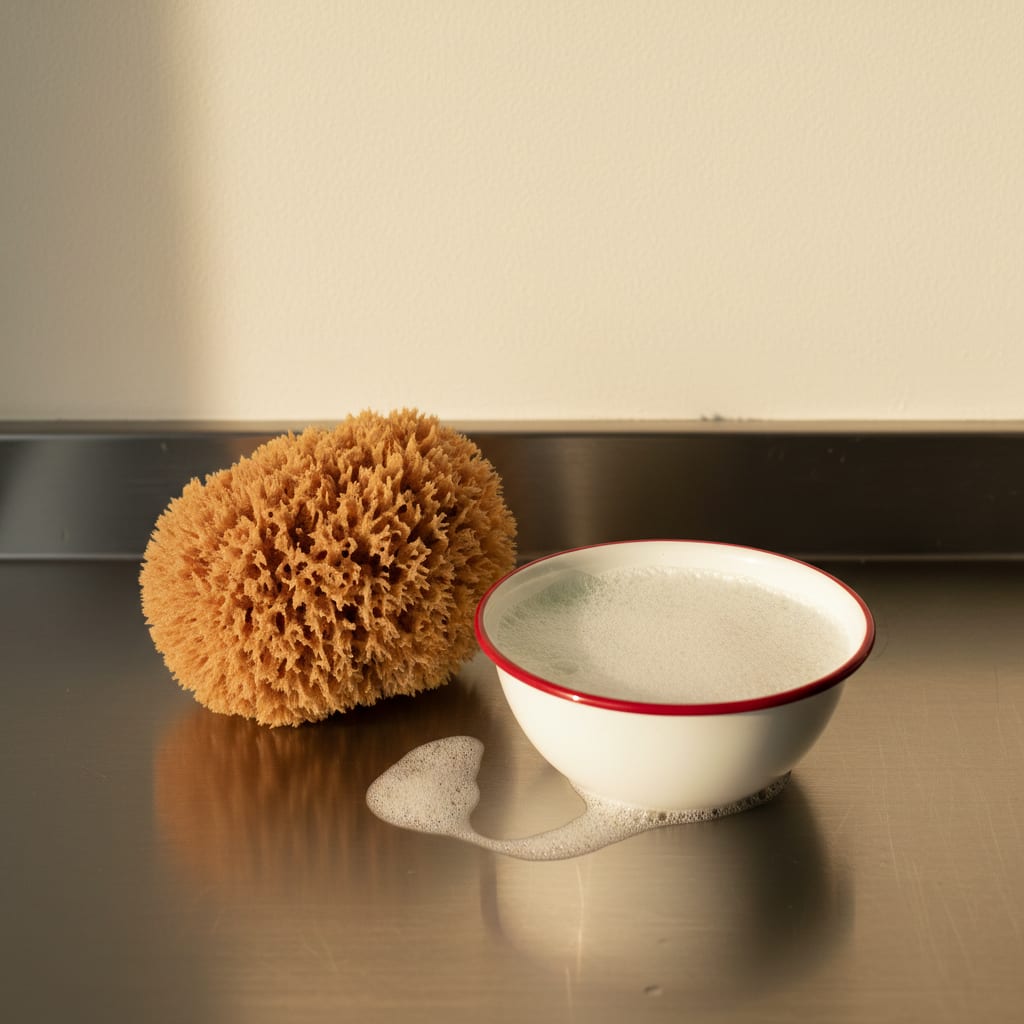
To clean stainless steel appliances, wash them with warm water, a little dish soap and a non-abrasive sponge, always rubbing in the direction of the grain. Then dry and polish with a clean microfiber cloth until no water is left on the surface. That is the whole everyday method, and it comes straight from the appliance makers. What scratches or dulls stainless is the list to learn: steel wool, scouring powders, abrasive cloths and paper towels. The same maker list names vinegar- and citrus-based cleaners, and fingerprint-resistant and black stainless finishes follow the owner’s manual.
First, find out which stainless you have
Before anything touches the fridge door, check what kind of finish it is. Whirlpool’s stainless steel care page puts it plainly: “Each type of Stainless Steel finish requires a different cleaning method.” It lists three:
| Finish | Everyday cleaning | Vinegar or citrus cleaners? |
|---|---|---|
| Traditional stainless | Warm soapy water with the grain, then dry | Not needed, and on Whirlpool’s no-use list |
| Fingerprint-resistant | The method in your owner’s manual | No |
| Black stainless | The method in your owner’s manual | No |
The coated finishes are the ones to be careful with: Whirlpool says the products on its no-use list could damage the finish, and that the damage is not covered by the warranty. If you are not sure which you have, the owner’s manual or the maker’s site will say, by model number. Until you know, treat it as coated.
The everyday method, with the grain
Brushed stainless has a grain: faint parallel lines running one way across the panel. Look at the door in daylight from an angle and you will see them, and check each panel before you wipe it. Wiping along those lines instead of across them is what makes the finish look even.
Whirlpool’s method for traditional stainless, step by step:
- Wash with “warm, soapy water, liquid detergent, and a nonabrasive sponge. Always rub evenly in the direction of the grain.”
- Dry and polish with “a clean microfiber or soft, clean cloth”.
- Make sure it is completely dry. Whirlpool explains why: “Water that is not completely dried off can cause discoloration—water may contain iron, which will initiate this discoloration.”
That third step is where streaks come from. In this kitchen, most streaks have been water and soap left to dry on the surface, not dirt. Use very little soap, wring the sponge almost dry, and follow straight behind it with the dry cloth. Two cloths, one damp and one dry, are the whole kit.
What scratches or dulls stainless steel
Whirlpool’s care page carries a list it marks IMPORTANT, and it is the most useful thing on it: “To avoid damage to the finish, do not use abrasive clothes, paper towels, newsprint, steel wool pads, abrasive powders, ammonia, citrus-based cleaners, vinegar-based cleaners, or oven cleaners.” It adds that damage from these “is not covered by the manufacturer’s warranty.”
A few of those surprise people:
- Paper towels and newspaper. Both are old window-cleaning habits, and both are named. Use microfiber.
- Steel wool. Named outright, as “steel wool pads”. Keep it for the cast iron.
- Scouring powder. Abrasive powders are on the list by name, and an appliance front is a different, often coated, surface. Keep powders off it.
- Oven cleaner. It goes inside the oven only. The inside has its own method in how to clean an oven.
Vinegar on stainless steel: the card-file question
This site runs on white vinegar, so this one needs saying straight. Whirlpool lists “vinegar-based cleaners” and “citrus-based cleaners” among the things not to use, on the same list as steel wool. On a fingerprint-resistant or black stainless finish, that settles it: no vinegar.
On plain traditional stainless the honest position is that the maker’s method does not need it. Warm soapy water and a dry cloth do the job, so there is no reason to put an acid on an appliance whose maker has told you not to. Vinegar keeps its jobs elsewhere: kettle scale, foggy glass, the inside of a washing machine now and then. The full list of where it works and where it does not is in cleaning with vinegar.
The drop of oil
My grandmother’s card for “chrome and steel” ends with a drop of mineral oil rubbed in with the grain to bring up the shine. It works for a day or two, and then the oil holds every fingerprint in the kitchen.
The makers point a different way. Whirlpool says that for traditional stainless, “polishes or brighteners should be used”, and to “only use products that were designed for use on stainless steel surfaces.” So the oil card is retired here. When the fridge door needs more than soap and water, a stainless cleaner made for the job, such as Therapy Stainless Steel Cleaner and Polish, is used as its label directs, wiped with the grain. Traditional stainless only: follow your manual on a coated finish.
One more line from the same page: do not use stainless polish “on non-stainless surfaces, such as plastic parts, trim pieces, or rubber door gaskets.” Wipe those with mild soapy water instead.
Chrome taps and the steel range trim rubbed with newspaper and a drop of oil every Friday until they shone.
A damp microfiber cloth with a drop of dish soap, a dry one right behind it, both with the grain. The newspaper and the oil stay in the card file.
Where it fits in the week
Appliance fronts are already on the Friday kitchen line of the weekly cleaning schedule. With small children the fridge door gets the soap-and-dry treatment on Friday and a dry-cloth wipe whenever handprints reach eye level. The stainless cleaner is for the monthly polish, not the daily round. A stainless microwave gets its outside done this way too, after the inside has had its steam in how to clean a microwave.
Handles carry the most grease, so wash them first with the soapy sponge, then dry them so they are not left slippery.
FAQ: cleaning stainless steel appliances
What is the best way to clean stainless steel appliances?
Warm water, a little dish soap and a non-abrasive sponge, rubbed with the grain, then dried completely with a microfiber cloth. That is Whirlpool’s method for traditional stainless.
Can you clean stainless steel with vinegar?
Whirlpool lists vinegar-based cleaners among the products not to use on its stainless finishes. Coated finishes, fingerprint-resistant and black stainless, should never get vinegar. On plain stainless, soap and water do the job without it.
Why does my stainless steel streak?
Usually from soap or water left to dry on the surface. Use less soap, wring the cloth out well, wipe with the grain and dry straight away with a clean cloth.
How do I know which way the grain runs?
Look at the surface from an angle in daylight. The fine lines in brushed stainless run in one direction, and that is the direction to wipe.
Sources loaded and read on 2026-11-19: Whirlpool, Cleaning Traditional Stainless Steel (200, 670KB); KitchenAid product help, How to clean and care for stainless steel surfaces (200, 1.4MB, same guidance).
More cards under Old-Fashioned Methods in the file.