How to Sleep in a Heatwave With No Air Conditioning
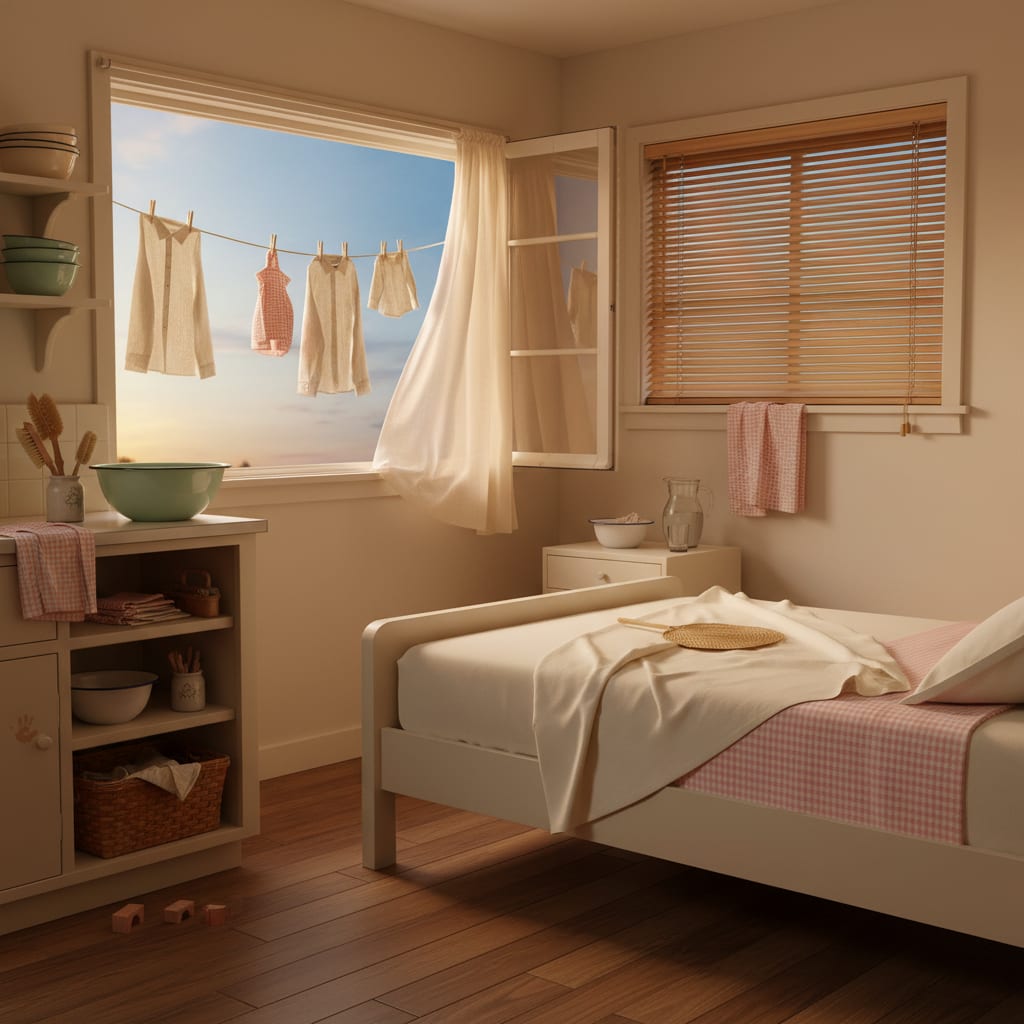
A house without air conditioning is cooled by timing, not equipment. Shut every window, blind and curtain by mid-morning, before the outside air passes the inside air. Keep the house closed and dim all day and run nothing that makes heat — no oven, no dryer, no dishwasher drying cycle. Then at dusk, once the outdoor temperature drops below the indoor one, open up and put a box fan in an upstairs window facing out to push the day’s hot air outdoors. Change the bedding to cotton, and the bedrooms are usable by the time anyone lies down in them.
The heatwave day, in order
The method is a rhythm, not a trick. The card in the file has six lines.
- Dawn, while it’s still cool. Open everything wide and get the coolest air of the day in. The laundry goes out on the line now too.
- Mid-morning, close it down. The moment outside feels warmer than in, shut the windows and draw the blinds — sunny side first. A closed, dim house at nine in the morning feels wrong and is the most effective thing you will do all day.
- Through the afternoon, make no heat. Oven off, dryer off, lamps off. Every appliance is a small heater, and in a sealed house they add up fast.
- Dusk, flush it out. Once outside has genuinely dropped below inside — check, don’t guess — open up and get the fan going.
- Bedtime, cross-flow only. Windows open on two sides of the sleeping floor, so air moves through rather than sitting there.
- Overnight, run the machines. Laundry and dishwasher go on after dark and come out in the morning.
The fan goes in the window, facing out
The mistake almost everyone makes is aiming a fan at a person. A fan blowing on you evaporates sweat and does nothing to the room’s temperature. A fan pushing air out of a window changes the air in the house.
Set a box fan in an upstairs window facing outward, sealed in with a rolled towel down each side so air can’t loop back around it. Open a window at the far end of the house, downstairs and on the shaded side, and the fan pulls cooler evening air through every room between the two — twenty minutes of that moves more heat than a night of oscillating fans in bedroom corners. A flat-bladed 20-inch box fan is the right tool because it sits in the frame properly; a round pedestal fan can’t seal a window.
Once the house is flushed, fans move to the bedrooms — crossing the room rather than blowing onto anyone sleeping, and never onto a baby.
Shutters closed at nine, everyone on the porch until dark, and a damp sheet hung across the open window at night so the breeze came through it cool. Nobody thought of this as coping. It was simply what August was.
Same shape, one honest amendment: the damp-sheet trick only works in dry heat. In humid air it adds moisture to a room that already has too much and makes the night feel worse. Where I grew up it was genius; where I live now the box fan wins.
Change what’s on the beds
This is the laundry job that actually lowers a sleeping temperature, and it takes an afternoon.
Strip back to one layer. A fitted sheet and a single flat sheet is the whole heatwave bed. Duvets go away; a folded cotton blanket at the foot covers the hour before dawn when it finally cools.
Cotton or linen, nothing else. Percale cotton and linen breathe. Microfibre and jersey sheets — the soft, slightly stretchy ones that were perfect in February — hold heat against skin, and they are why the bed feels damp at two in the morning.
Deal with the waterproof layer. A vinyl-backed mattress protector is a heat trap, and in a child’s bed it does the most damage of anything on a hot night. Swap to a cotton-terry-topped one, which breathes far better and still does its job. Don’t strip protection out altogether to buy a cooler night — the double-layered bed for night-time changes is still the right build, just in cooler materials.
Wash bedding more often, dry it outside. Sweat in fabric is what makes a bed smell stale by day three; two sets per bed and a fast turnaround solves it. August is the one month where line drying is unarguably faster and cheaper than the machine — and the dryer’s heat stays outside the house.
The children’s rooms
Small children are worse at losing heat than we are, and the bedroom at the top of a closed house is usually the hottest room in it.
Get a thermometer into the room rather than guessing from the hallway. Ordinary sleep-room guidance sits in the high sixties to low seventies Fahrenheit, and in a real heatwave without air conditioning you will not hit it — the honest goal is the coolest room in the house, not a number. Betteroo’s rundown of the room-temperature range for baby sleep is the reference worth reading on a calm afternoon.
Move the sleeping downstairs if you can: a travel cot in a shaded ground-floor room beats a beautiful nursery at 85 degrees.
Dress down a full layer and keep the crib itself empty: a lighter or lower-tog sleep sack, or in real heat a diaper and a short-sleeved bodysuit — and nothing loose in the bed to compensate. What comes off the child does not go into the crib as a blanket. Betteroo’s guide to dressing a baby for sleep has the layer-by-layer version.
Never put ice packs, frozen bottles or cooling gel mats in a crib or toddler bed — cool the room, not the bed.
Keep fluids up during the day — for babies under about six months that means more frequent milk feeds rather than water, and your pediatrician is the person to ask about anything beyond that. A child who seems unusually hot, flushed, floppy or is breathing fast is a call to make, not a night to manage.
The wind-down when the room is still warm
A lukewarm bath half an hour before bed works, provided it’s lukewarm — cold water makes the body clamp down and rebound warmer. A damp washcloth on the back of the neck works on the same principle: gentle, not shocking.
Keep the routine to its usual length and order. Heat already disrupts a night; a rewritten bedtime disrupts it twice, and the evening reset works better held steady in a bad week. Dim lights earn double now, since every bulb is a heater. Expect a broken night anyway, and plan the morning around it.

What to fix before next summer
A heatwave shows you where a house leaks heat, so write the notes down while they’re obvious: which rooms were unusable and at what hour, which windows take the afternoon sun with nothing on them, whether the attic hatch is sealed, whether lined curtains would earn their place in the west-facing bedroom. That list goes on the fall card of the seasonal cleaning checklist — every job on it is cheaper and easier in October than in the week you need it.
FAQ: sleeping through a heatwave
When should I open the windows in a heatwave?
Only when the outside air is genuinely cooler than the inside air — usually late evening through early morning. Opening windows on a hot afternoon imports heat, however much fresher it feels standing in the draught.
Should a fan point in or out of the window?
Out, for the evening flush — pushing hot indoor air outside pulls cooler air in through a window elsewhere in the house. After that, point fans across bedrooms rather than at sleepers, and never at a baby.
What should a baby wear to sleep in hot weather?
A layer less than usual: a lighter or lower-tog sleep sack, or in real heat a diaper and a short-sleeved bodysuit. Keep the crib empty — no blankets, no cooling mats, no ice packs, whatever the room temperature.
Is it safe to leave a fan running all night in a child’s room?
Generally yes, provided it circulates air across the room rather than blowing onto the child, with the cord and unit well out of reach. Air moving past the crib beats a stuffy sealed room.
Next cards in the file
Nursery Organization: Set Up for the 2am You
July 17, 2026
Lullabies That Actually Work: The Evening Wind-Down
July 27, 2026
Getting the House Guest-Ready: The 3-Day Plan
August 3, 2026