Houseplants in a child’s bedroom are fine at night: the old warning that plants “steal the oxygen” while you sleep does not hold up, because a plant small enough for a bedroom gives off far less carbon dioxide than the child sleeping there. The real questions are which plant, and where. Choose from the non-poisonous lists, such as African violet, Christmas cactus or Boston fern. Keep pothos, philodendron, peace lily and the December holly and mistletoe out of a young child’s room. Put every pot out of reach, and know your plants’ names in case one gets chewed.
The old warning: plants out of the room at night
It is an old household rule, and it sits in my grandmother’s wooden card file with the airing and the ferns: plants and flowers out of the sickroom at night. Plants breathe at night, the reasoning went, and a sleeping child in a closed room should not have to share the air.
Half of it is true. BBC Science Focus’s answer to whether you should keep plants in the bedroom explains that when the light goes off, “photosynthesis stops”, so the plant “no longer takes in CO2”, while in the dark it “continues to respire”, which releases some carbon dioxide. That is the kernel the warning grew from.
The other half is scale. The same answer goes on: “any plant small enough to fit in your bedroom produces far less carbon dioxide than a sleeping human.” It calls the poisoning worry “an urban myth” and a bedroom plant “perfectly safe to share a room with.”
What does raise a closed bedroom’s carbon dioxide overnight is the sleeper. The measurements on that, and a ten-minute fix, are in airing the bedroom before bed. A plant on the dresser does not change that picture.
The new myth: plants clean the air
The modern version of the story runs the other way: a snake plant on the windowsill to purify the nursery air. That one does not hold up either. Drexel University’s review of 30 years of potted-plant studies found the famous results came from plants “placed in a sealed chamber (often with a volume of a cubic meter or smaller)”. In a real room, ordinary air exchange “far outpaces plants”. By the researchers’ calculation it would take “between 100 and 1,000 plants per square meter of floor space” to match a building’s ventilation, “or even just a couple open windows in a house.”
So a plant in a child’s room is neither a hazard to the air nor a cure for it. Pick it for safety, and for how much you like looking at it.
Which houseplants are safe for a child’s room
Two lists were loaded for this card: the National Capital Poison Center’s illustrated list of poisonous and non-poisonous plants, and the University of Connecticut’s houseplants: safe and toxic varieties fact sheet. Both are short lists, not every plant in the shop, and Poison Control says “every situation is different; these lists are just a guide.”
On the safe side in one or both lists, and easy to keep on a bedroom sill:
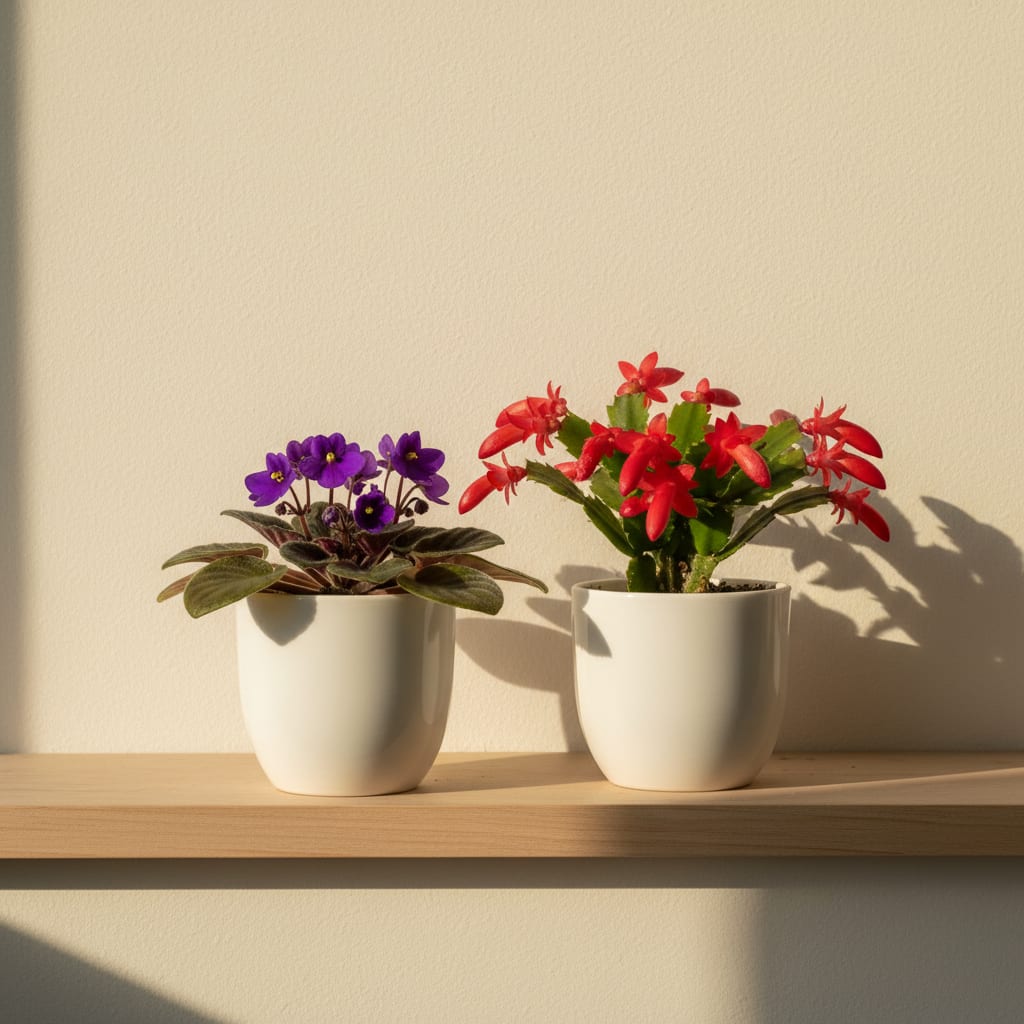
- African violet (both lists)
- Christmas cactus (both lists)
- Jade plant (both lists)
- Swedish ivy (both lists)
- Boston fern, cast iron plant, prayer plant, peperomia and nerve plant (UConn)
- Coleus (both lists) and begonia (Poison Control)
- Poinsettia: on both safe lists, with a note. Poison Control says it “may cause irritation”, and UConn marks its sap “may be irritating”.
UConn adds a fair warning to its own safe list: “any plant might cause a reaction in certain sensitive individuals.”
Which to keep out of a young child’s room
On the poisonous side, in one or both lists, and common in houses:
- Pothos, philodendron and peace lily (Spathiphyllum) are on both.
- Dumb cane (Dieffenbachia), caladium and elephant ear are on both.
- ZZ plant, Chinese evergreen, English ivy, anthurium, schefflera and fishtail palm are on UConn’s.
- For December: holly berries, mistletoe and Jerusalem cherry are on both, and amaryllis and hyacinth on UConn’s. That makes the holiday plants the ones to watch, and the bedroom is a good place for none of them.
UConn says these “may cause symptoms ranging from a mild stomach ache to serious heart and kidney problems”, and also that “many plants need to be consumed in considerable quantities for poisoning to occur” and often taste bitter. Both are true. The University of Missouri Extension’s advice for families, in its note to check your home for toxic plants, is short: “Remove poisonous plants from your home until children are older.” A child’s own bedroom, where they are alone for hours, is the first room to apply it to.
These lists are about people. If you also have a cat or a dog, check the plant against a pet list as well. Safe for a toddler does not automatically mean safe for the cat.
Where the plant goes
Poison Control’s first two rules are the whole card: “Find out the names of your plants,” because “expert help depends on accurate plant identification”, and “Keep indoor plants where children can’t reach them.” In a bedroom that means:
- High and heavy-based. On a sill or dresser top the child cannot climb to, in a pot that does not tip when nudged. Never on a low table by the bed.
- Hanging, if you have the ceiling for it. A hook and a cotton hanger such as the Mkono macrame plant hanger keeps a pot well out of reach. Hang it by the window, not over the crib or the bed, and keep the cords out of reach as well.
- Nothing to pick up in the pot. Poison Control notes that “even non-poisonous plants can cause choking.” Skip pebble top-dressing and loose decorations in a small child’s room.
- Not in the crib zone at all. A baby’s sleep space stays bare and flat, with nothing within reach of it. The baby sleep environment card has the full setup.
Pencil each plant’s name under its saucer, so nobody has to guess.
Ferns in every bedroom by day, carried out to the hall each night, because the card file said so.
One African violet on the high windowsill, staying put all night. The window gets ten minutes of airing before bed instead, and the pothos lives in the kitchen.
If a leaf gets eaten
UConn and the Missouri Extension give the same first steps: remove the rest from the mouth, rinse the mouth or give water, and call. Poison Control’s number is 1-800-222-1222, free, confidential and open around the clock, and its online tool, webPOISONCONTROL, can be used instead. Have the plant’s name ready, or a piece of it. Missouri suggests programming the number into your phone now. In an emergency, call 911.
 The plant isn't keeping them up. Check the schedule.
Betteroo builds a sleep plan around your child's age, with naps, wake windows and bedtime that change as they grow.
Take the sleep quiz →
Setting up the rest of the room? Betteroo has 30 ideas for a toddler’s room that pick up where the windowsill leaves off.
FAQ: houseplants in a child’s bedroom
Is it safe to sleep with plants in the bedroom?
Yes. Plants release a little carbon dioxide at night, but BBC Science Focus notes that a bedroom-sized plant produces far less than a sleeping person. The night-time oxygen worry is a myth.
What houseplants are safe for kids?
African violet, Christmas cactus, jade and Swedish ivy are on both the Poison Control and UConn safe lists. Even safe plants belong out of reach, because leaves and soil can still be a choking risk.
Is pothos safe in a child’s room?
Pothos is on both poisonous lists, along with philodendron and peace lily. Keep it out of a young child’s room. Missouri Extension advises removing poisonous plants until children are older.
Do plants clean the air in a bedroom?
Not measurably. Drexel’s review found ordinary ventilation clears the air far faster, and it would take 100 to 1,000 plants per square meter to compete.
Sources loaded and read on 2026-11-23: National Capital Poison Center, Poisonous and non-poisonous plants (200, 1.47MB); UConn Home & Garden Education Center, Houseplants: Safe and Toxic Varieties (200, 97KB); University of Missouri Extension, Check your home for toxic plants (200, 29KB); Drexel University, Study: Actually, Potted Plants Don’t Improve Air Quality (200, 75KB); BBC Science Focus, Is it true that you shouldn’t keep plants in the bedroom? (loaded via WebFetch); Betteroo, Toddler Room Ideas (200, 210KB).
More cards under Organizing With Kids in the file.