How to Get Tree Sap Out of Clothes (and Carpet)
To get tree sap out of clothes, scrape off as much as you can with a spoon or a dull knife, hardening soft sap first with an ice cube in a plastic bag. Test rubbing alcohol on an inside seam for colorfastness, then dab it on the spot and blot until the sap lifts. Work liquid laundry detergent into what’s left, let it sit for five minutes, and wash on the warmest water the care label allows. Check the spot before drying. Heat sets sap, so the garment stays out of the dryer until the stain has gone.
Why sap is harder than it looks
Sap is resin, and it behaves more like glue than a stain. Tide’s tree sap stain guide calls it “one of the most problematic outdoor stains precisely because of its gluey nature”: a sticky patch picks up dirt and gets darker the longer it stays. Two rules follow, and they matter more than any product:
- Deal with it soon. Fresh sap is soft and mostly on the surface; old sap has had time to catch grime.
- No heat until it is gone. Tide is blunt about the dryer: its heat “will set the stain, making it much more difficult to remove.” Hot irons and hair dryers count too.
That second rule is the big difference from candle wax, where heat is the method. How to get candle wax out of fabric irons the wax into paper towels; sap gets the opposite treatment, cold and a solvent.
How to get sap out of clothes, step by step
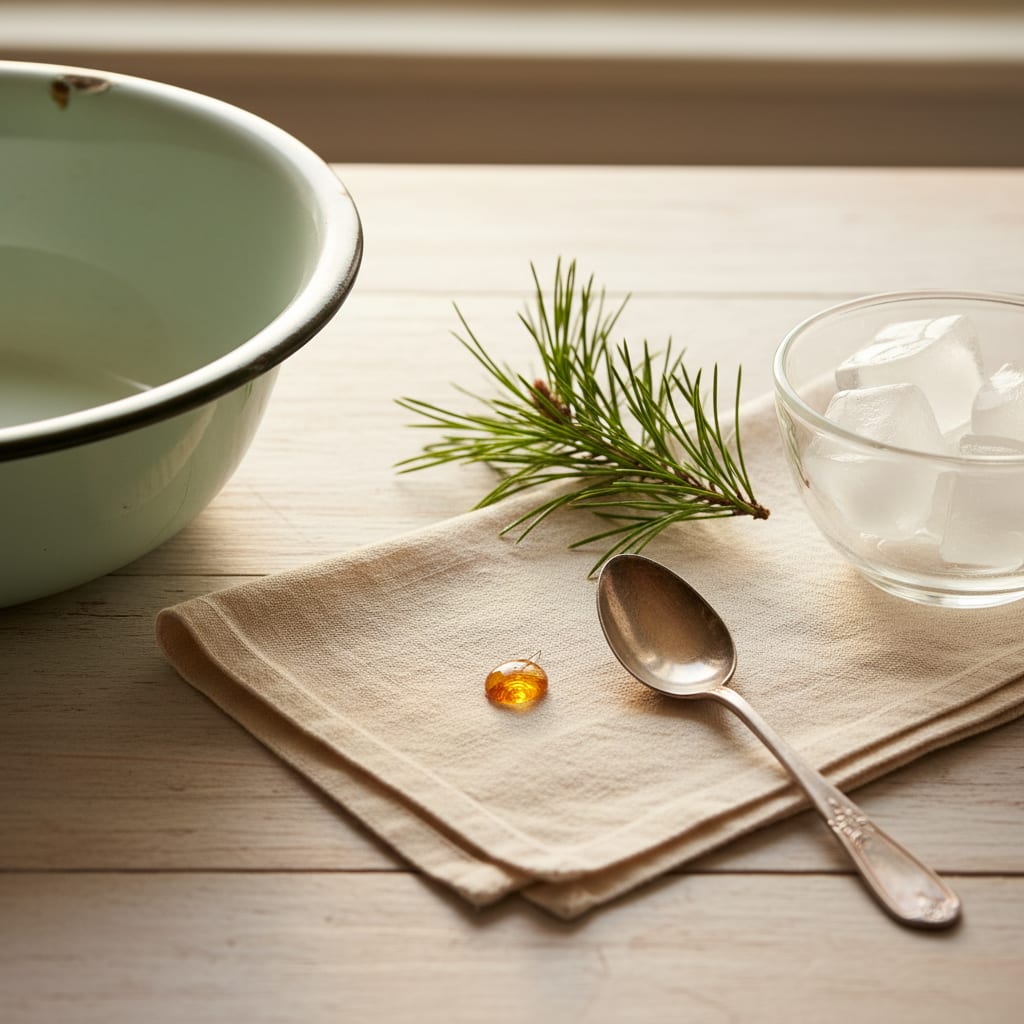
- Harden it if it’s soft. Hold an ice cube in a plastic bag against the sap until it firms up. The University of Georgia Extension’s chewing gum stain method, the closest sticky-stain entry in its textile guide, starts the same way: “Apply ice to harden stain. Scrape off excess.”
- Scrape. Use a spoon or the back of a dull knife and lift, don’t grind. Every bit that comes off now is a bit you don’t have to dissolve.
- Test the solvent. Tide’s colorfastness test is to put a little rubbing alcohol or hand sanitizer on an inside seam, wait one to three minutes, then dab with a towel. No color on the towel means the fabric is colorfast.
- Dissolve the rest. Dab rubbing alcohol, or a clear alcohol-based hand sanitizer, onto the spot and blot with a paper towel. Turn to a clean part of the towel as it picks up sap. A basic bottle of 70% isopropyl rubbing alcohol does the job.
- Pretreat. Work liquid laundry detergent into the spot with your fingers or a soft toothbrush and leave it for five minutes.
- Wash without rinsing the detergent out, on the hottest temperature the care label allows.
- Check before drying. If any stickiness or shadow remains, repeat steps 4 to 6. Air-dry if in doubt.
If the stain went through the dryer before you found it, the same steps are still worth a try, but expect it to take more rounds. For the stains that come in with sap season, such as grass and mud on the same pair of jeans, the old-fashioned stain removal table has the rest.
Sap on delicates, wool and dry-clean-only clothes
Alcohol is a solvent, and Tide warns that it “can wreak serious havoc on your fabrics”, which is why the seam test is step 3 and not optional. UGA’s rule for any stain applies here: “Always read the care label before trying any stain removal method. Do not use any products or procedures prohibited by the care label.” For a dry-clean-only coat, scrape off what you safely can, don’t experiment with solvents, and point the stain out to the cleaner.
Pine pitch on a coat sleeve got an ice cube from the icebox and the back of a butter knife on the porch, then went straight into the wash basket with a note pinned to it.
Ice and the butter knife survive. Then the seam test, rubbing alcohol on a paper towel, detergent rubbed in, and a sticky note on the washer lid so nobody moves it to the dryer.
How to get sap out of carpet and upholstery
A real Christmas tree brings sap inside: on the skirt, the rug under the stand and the sofa arm someone leaned the tree against. Tide’s carpet method:
- Fill a plastic bag with ice and lay it on the sap until it hardens.
- Scrape off what you can with a dull knife or a spoon.
- Mix a cleaning solution. Tide’s own uses two teaspoons of its liquid detergent in a cup of hot water. Work it into the spot with a soft toothbrush and leave it for five minutes.
- Blot it up with a paper towel, wipe with a damp cloth, and blot dry.
- Let it dry overnight, then vacuum.
UGA’s carpet version of the gum method adds a useful trick: cut a hole the size of the spot in a piece of cardboard and lay it down first, so the ice doesn’t freeze the surrounding pile and broken frozen bits don’t scatter. It also warns against getting solvent into the carpet backing. On upholstery, check the fabric’s cleaning code or tag before any liquid goes on.
Safety with solvents
Rubbing alcohol and hand sanitizer are flammable. UGA’s cautions for solvent spotting are short and worth following to the letter: use them with good ventilation, wear rubber gloves, “do not have an open flame near flammable cleaning solutions”, and keep every product out of children’s reach. At Christmas that means candles out and the fireplace cold while you work on a rug. Store the bottle back on a high shelf, not in the under-sink cabinet a toddler can open.
What about the folk remedies?
Tide itself lists two home alternatives that “some people swear by”: rubbing sunscreen into the spot before washing, and freezing the sap with an ice cube, then rubbing it with a cloth dipped in vinegar. Treat both as optional extras. Greasy pantry fixes such as butter are a poor trade on fabric, because they leave an oil mark of their own.
FAQ: getting sap out of clothes
Does rubbing alcohol remove tree sap from clothes?
Yes, it is the standard solvent for it. Test it on an inside seam first, dab and blot rather than rubbing, then pretreat with detergent and wash.
Does hand sanitizer get sap out of clothes?
A clear, alcohol-based hand sanitizer works the same way as rubbing alcohol, because the alcohol does the work. Avoid tinted or lotion-heavy kinds, and do the same seam test.
Will the dryer set a sap stain?
Yes. Heat sets sap, so check the spot after washing and repeat the treatment before the garment goes anywhere near the dryer.
How do you get dried, hardened sap out of fabric?
Scrape off what you can, then give the alcohol longer to soften it, dabbing and blotting in rounds. Expect to repeat the alcohol, pretreat and wash steps more than once.
Sources loaded and read on 2026-10-27: Tide (P&G) tree sap stain guide; University of Georgia Cooperative Extension textile stain-removal guide (chewing gum).