An antique crib or heirloom cradle is not a safe place for a baby to sleep, however sturdy it looks. Full-size cribs have had to meet a federal safety standard since June 28, 2011, and cradles and bassinets one for those made from April 23, 2014. A family piece made before then was never built to either, and older ones often have wide slat gaps, decorative cutouts, tall corner posts, a loose mattress or lead in the paint. Keep the heirloom, and put the baby in a crib or bassinet that meets today’s standard, with a firm, flat, fitted mattress and nothing else in it.
What the dates mean
Two federal rules do the work here.
- Full-size cribs, June 28, 2011. The crib standard, 16 CFR part 1219, covers “new and used full-size baby cribs” and applies from that date to their sale and “resale”. Mini cribs have their own matching rule, part 1220, from the same date.
- Bassinets and cradles, April 23, 2014. The bassinet and cradle standard, 16 CFR part 1218, applies to bassinets and cradles “manufactured or imported on or after April 23, 2014”.
So a hand-me-down crib is worth considering only if it was made after June 2011 and still has every original part, all of it the maker’s own. A crib from your own childhood, or a cradle from your grandmother’s, is on the wrong side of both dates. Cleveland Clinic’s page on antique cribs adds that before 2011, federal crib standards “hadn’t been updated in nearly 30 years.”
What an old crib gets wrong
Cleveland Clinic’s pediatrician, Dr. Heidi Szugye, lists the dangers in older cribs, and KidsHealth’s crib safety page and the AAP’s Choosing a Crib say the same things:
| Problem | Today’s rule | Why it matters |
|---|---|---|
| Drop side | Fixed sides only | Cleveland Clinic calls drop-side cribs “dangerous — and sometimes even deadly”; KidsHealth says never accept a used one |
| Wide slats | No more than 2 3/8 inches apart, “roughly the width of a soda can” | A baby’s body can slip through a gap their head cannot |
| Cutouts | Solid headboard and footboard, “no decorative cutouts” | Carved openings can catch an arm, a leg or a head |
| Corner posts | Flush with the headboard and footboard, or over 16 inches | Anything in between can snag clothing |
| Mattress fit | No more than two fingers between mattress and side | A baby can be trapped in the gap |
| Worn or missing parts | All original hardware, nothing substituted | Time loosens joints and loses screws |
The AAP’s page on choosing a crib is blunt about the furniture people most want to use: “Antique cribs, for example, may look pretty, but the spacing between the slats rarely conforms to the current standard.” KidsHealth goes further and advises avoiding cribs more than 10 years old, ending: “a crib that has been in the family for generations won’t be the best one to use!”
Mattress fit is the one people try to fix with a new mattress. Betteroo keeps a clear chart of today’s crib mattress dimensions, which explains that today’s mattresses and full-size crib interiors are both sized by federal rule so that one fits the other. A frame from 1948 was built to neither, so a new mattress may still leave a gap. Do the two-finger test, and if it fails, the crib is out.
The cradle question
Cradles get less attention than cribs. The rule for any sleep space is the same. The AAP’s parent guide to safe sleep says a baby needs “a firm, flat sleep surface”, that “any surface that inclines more than 10 degrees isn’t safe for your baby to sleep on”, and that the crib, bassinet, portable crib or play yard should meet CPSC safety standards. The NIH’s Safe to Sleep campaign says the same: firm, flat, level, “covered only with a fitted sheet”.
An old cradle was never built or tested to the 2014 standard, and its pad, sides and stand cannot be checked against it at home. Cleveland Clinic’s verdict on antique cribs fits the cradle just as well. “You don’t have to part with a cherished crib,” Dr. Szugye says. “Just don’t use it for a sleeping baby.”
Lead paint and old finishes
Lead is the second reason, and it applies even if the baby never sleeps in it. Cleveland Clinic says that on a crib made before 1978, “the paint or finish could contain lead”. The AAP notes that the finish on an antique crib may include old layers of lead-based paint.
Two things from the EPA’s page on lead at home matter for an heirloom:
- Refinishing old furniture is on its list of jobs that can expose you to lead. Sanding an old cradle down in the garage to repaint it is exactly the dust you are trying to avoid, and it leaves you with a freshly painted piece that still does not meet the 2014 standard.
- Home lead test kits are not the answer for furniture. The EPA says the CPSC “does not recommend using these test kits on consumer products.”
If the paint is chipping, keep the piece out of reach of a crawling baby and a teething toddler. The EPA’s advice for chips is to pick them up with a damp paper towel and wipe the surface with a clean wet one.
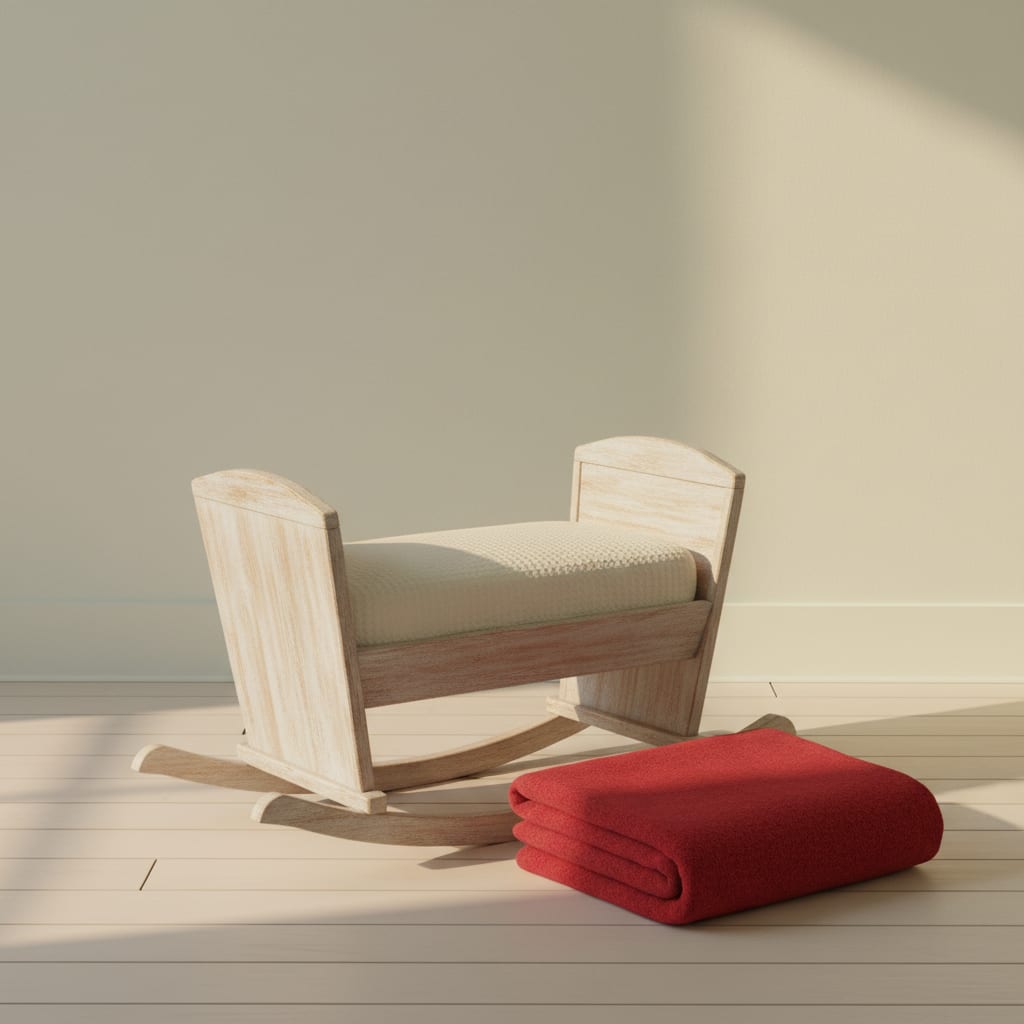
Four babies in the same painted pine cradle beside the bed, a folded quilt for a mattress and a pillow at the head.
The cradle holds folded blankets at the foot of our bed. The baby sleeps in a plain modern crib in the same room, on a firm mattress with one fitted sheet.
Where the baby sleeps instead
The safe answer is plain: a crib, bassinet or play yard that meets the current standard, with a firm, flat mattress made for it and a fitted sheet, and nothing else in it. No pillow, no quilt, no bumper, no toys. The AAP and NIH both advise sharing a room with the baby, in their own sleep space, for at least the first six months.
A modern crib can still be plain wood with fixed slats, such as the DaVinci Kalani 4-in-1 convertible crib. How the room around it is set up is in baby sleep environment, and where the gear lives once it arrives is in nursery organization.
Keeping the heirloom
An heirloom does not have to earn its place by being slept in. A few ways to keep it in the family’s life:
- A blanket or linen cradle at the foot of a bed, out of the baby’s sleep space.
- A doll cradle for an older child, once the baby is past the stage of pulling up on furniture.
- Converted furniture. Cleveland Clinic notes that people turn old cribs into “desks, benches and even outdoor flower beds.”
The same thinking about what to pass down, and how, is in passing down childhood books.
 New crib, same short nights? Check the schedule.
Betteroo builds a sleep plan around your baby's age, with naps, wake windows and bedtime that change as they grow.
Take the sleep quiz →
FAQ: antique cribs and heirloom cradles
Can a baby sleep in an antique crib?
No. Antique cribs predate the 2011 federal crib standard and often have wide slats, cutouts, tall corner posts, a poor mattress fit or lead paint. Keep it as a keepsake and use a crib that meets today’s standard.
Is a crib from the 1990s or 2000s safe?
Not for a baby’s sleep. Any full-size crib made before June 28, 2011 was built before the current standard. KidsHealth advises against cribs more than 10 years old.
Can I use my grandmother’s cradle for naps?
Not for sleep, even short naps. The bassinet and cradle standard covers products made from April 23, 2014, and an old cradle cannot be checked against it at home.
Can I repaint an old crib to make it safe?
Repainting does not fix wide slats, cutouts or mattress fit, and sanding old paint can release lead dust. The EPA lists refinishing old furniture as a job that can expose you to lead.
Sources loaded and read on 2026-11-19: 16 CFR parts 1218, 1219 and 1220 (govinfo, 2024 edition); Cleveland Clinic, Antique Cribs: Are Older Cribs Safe for Your Baby?; KidsHealth, Cribs; AAP HealthyChildren, Choosing a Crib and A Parent’s Guide to Safe Sleep; NIH Safe to Sleep, Ways to Reduce Baby’s Risk; EPA, Reduce the Risk of Lead Exposure at Home; Betteroo, Crib Mattress Size.
More cards under Organizing With Kids in the file.