To get blood out of sheets, use cold water, never hot. Strip the sheet, rinse the stain under the cold tap from the back of the fabric, then work a little liquid laundry detergent into it and soak it in cold water. Wash it on a cold cycle and check the stain before the sheet goes anywhere near the dryer, because heat sets blood for good. A dried stain needs the same start plus a longer soak in an enzyme presoak. Hydrogen peroxide is a bleach, so it is for white cotton only, after a test on a hem.
Why cold water, and why never hot
Blood is a protein stain, the same family as milk and egg in old-fashioned stain removal. Heat sets protein into the fibers. Tide’s blood stain guide says it in one line: “Do not use hot water, as this will set the stain.” It also explains why speed helps: “the hemoglobin in the blood begins to clot when exposed to air and can cling tightly to fibers.”
New Mexico State University’s extension guide, Removing Clothing Stains, puts the general rule as “Heat sets stains. Do not press a stained fabric or dry it in the dryer.” That covers the iron and the dryer as well as the wash water.
Fresh blood on sheets: step by step
The faster you start, the less work it is.
- Strip the bed. Take the sheet off before you treat it, so nothing soaks through to the mattress protector underneath.
- Rinse from the back. Turn the sheet over and run cold water through the back of the stain. Tide’s first step is to “rinse the garment with cold water”, and running it from the back pushes the blood out the way it came in instead of through the weave.
- Blot. Tide’s on-the-go advice is to rinse with cold water “and blot the stain”. Press with a clean cloth.
- Work in liquid detergent. Tide’s pre-treat step is to soak in “a solution of liquid detergent and cold water” for up to 5 minutes, weighted under with a white towel so it stays submerged.
- Wash cold. Tide says to wash “on the usual cycle in cold water”. Check the care label first.
- Check before drying. Tide says to repeat the steps if the stain is still there “before tossing in the dryer, as drying will set the stain.” Look at it in daylight while it is still wet, and line-dry it if you are not sure.
Salt is the card-file addition. My grandmother’s card for blood says a handful of salt in the cold soak, and it lives on the protein row of the stain chart in old-fashioned stain removal. None of the sources here gives salt a role on blood, so take it as an old habit rather than a tested method. The detergent is doing the real work.
Dried blood: the enzyme soak
A dried stain has had time to set, and Texas A&M’s answer is an enzyme presoak. Its AgriLife Extension Quick Stain Removal Guide lists blood with the protein stains and gives this method:
- “Freely apply liquid detergent, work into stained area, rinse hands and repeat.”
- “Wash with one cup of detergent, add 1 cup of non-chlorine bleach with enzyme presoak.”
- “If stain remains, soak item for 1 or 2 days, stir water occasionally. Machine wash again. Air dry.”
That last line is the one people skip. A dried stain on a sheet that has already been through a dryer can take a long soak. Keep the water cold, give it a stir when you pass, and air dry it so any trace that is left is not set again.
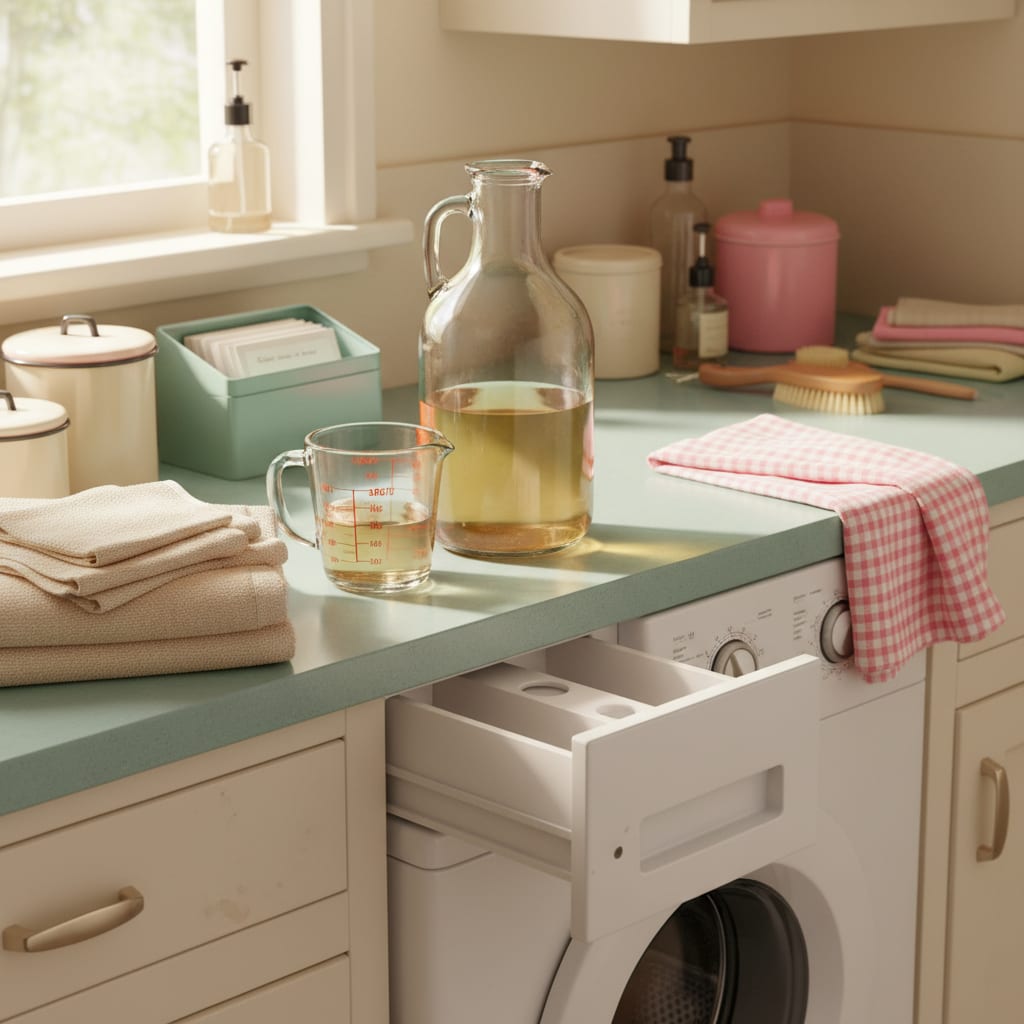
For an enzyme product to work into the stain before the soak, the worked example in this house is Biokleen Bac-Out, an enzyme stain spray that lists laundry among its uses. Follow the label, and test it on a hem of a colored sheet first. An enzyme detergent does the same job in the soak water.
Hydrogen peroxide: whites only, after a test
Hydrogen peroxide is the internet’s favorite answer for blood. It is also a bleach. NMSU’s guide lists it under “Bleach—Removes unwanted color”, next to lemon juice and chlorine bleach. So:
- White cotton sheets only. Never on colored or patterned bedding.
- Test it first. NMSU says to “always test the removal method on an inside seam or hem.”
- Dab a little on, then rinse well. Do not leave it to soak, and do not pour it on and walk away.
- Never mix it with other removers. NMSU’s rule is “Do not mix stain removers (especially ammonia and chlorine bleach). If more than one remover is needed, rinse thoroughly between the use of each.”
The same rinse-between rule goes for anything else you try. A sheet that has had peroxide on it gets a full cold rinse before an enzyme soak, not after.
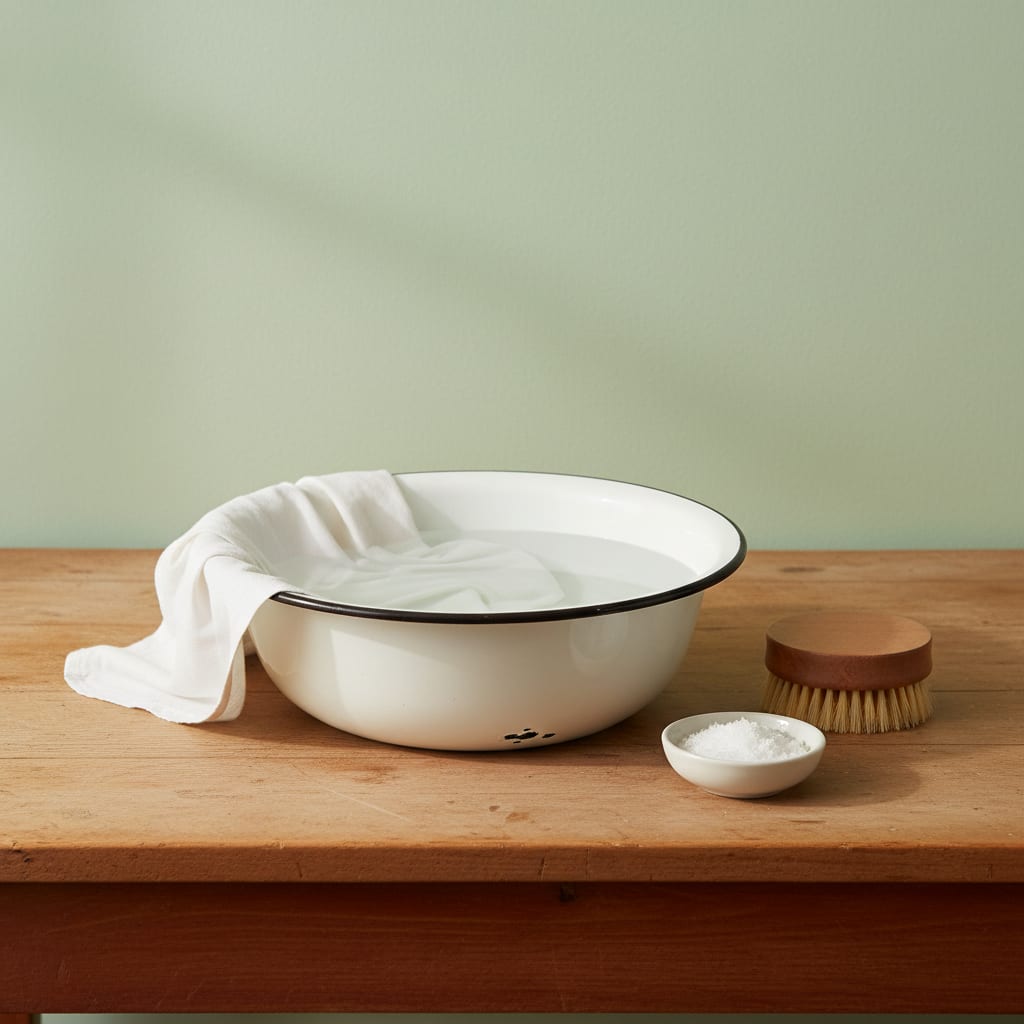
Straight into a basin of cold salted water, scrubbed against itself, and hung out on the line in the sun to finish whitening.
Cold rinse from the back, liquid detergent worked in, a cold soak, and the sheet stays out of the dryer until the stain is gone. The line still gets the whites.
Colored sheets and the mattress underneath
- Colored cotton and percale: cold water, detergent and an enzyme soak, after testing on a hem. No peroxide, no chlorine bleach.
- Flannel and blends: the same cold method. Read the care label for wash temperature and drying, and air dry until you are sure the stain is gone.
- The mattress protector: if it soaked through, wash the protector the same way. A clean, dry protector on every bed makes a night accident a laundry job instead of a mattress job; the mattress itself has its own method in how to clean a mattress.
After the stain is out, the sheet goes back into its normal rotation. How often each bed gets changed is in how often to wash sheets.
FAQ: getting blood out of sheets
Does hot water get blood out of sheets?
No. Hot water sets blood stains. Use cold water for the rinse, the soak and the wash, and keep the sheet out of the dryer until the stain is gone.
How do you get dried blood out of sheets?
Work liquid detergent into it, then wash with an enzyme presoak. Texas A&M’s guide says to soak the item for one or two days if the stain remains, then wash again and air dry.
Does hydrogen peroxide remove blood from sheets?
Use it only on white cotton, if at all. It is a bleach, so test it on a hem first, dab it on rather than soaking, rinse it out well, and never use it on colored sheets.
Can I put a bloodstained sheet in the dryer?
Not until the stain is completely gone. Drying sets the stain, so check the sheet while it is wet and line-dry it if you are unsure.
Sources loaded and read on 2026-11-19: Tide, How to Remove Blood Stains (200, 165KB); New Mexico State University Extension, Removing Clothing Stains, Guide C-502 (PDF, 200, 789KB); Texas A&M AgriLife Extension, Quick Stain Removal Guide (PDF, 200, 137KB).
More cards under Laundry & Linens in the file.