To get a grease stain out of clothes, blot off what you can, then work a little clear dish soap into the spot from both sides and leave it a few minutes. Wash in the hottest water the care label allows, then check the spot before anything goes in the dryer. Heat from the dryer sets grease, and a set stain is much harder to shift. For an old, set-in stain, do the dish soap again for ten minutes, soak in warm water for half an hour, and wash again. Air-dry until it is gone.
Why grease needs soap, not water
Grease and oil do not dissolve in water, which is why rinsing a buttery shirt under the tap does nothing useful. Tide’s oil-stain guide says most oil stains “don’t dissolve in water at all,” and that dish soap and laundry detergent are made to break oil down and lift it from fabric. That is the grease row on the old-fashioned stain removal chart: protein wants cold water, tannin wants a soak, and grease wants soap.
Grease also gets worse with time. Tide warns that an oil spot left alone gets darker and “if left too long, it can also set permanently.” So the fastest fix is the best one.
Fresh grease: the six-step card
This is what we do when the salad dressing lands, the butter slides off the toast, or a bike chain leaves its mark on a school pant leg.
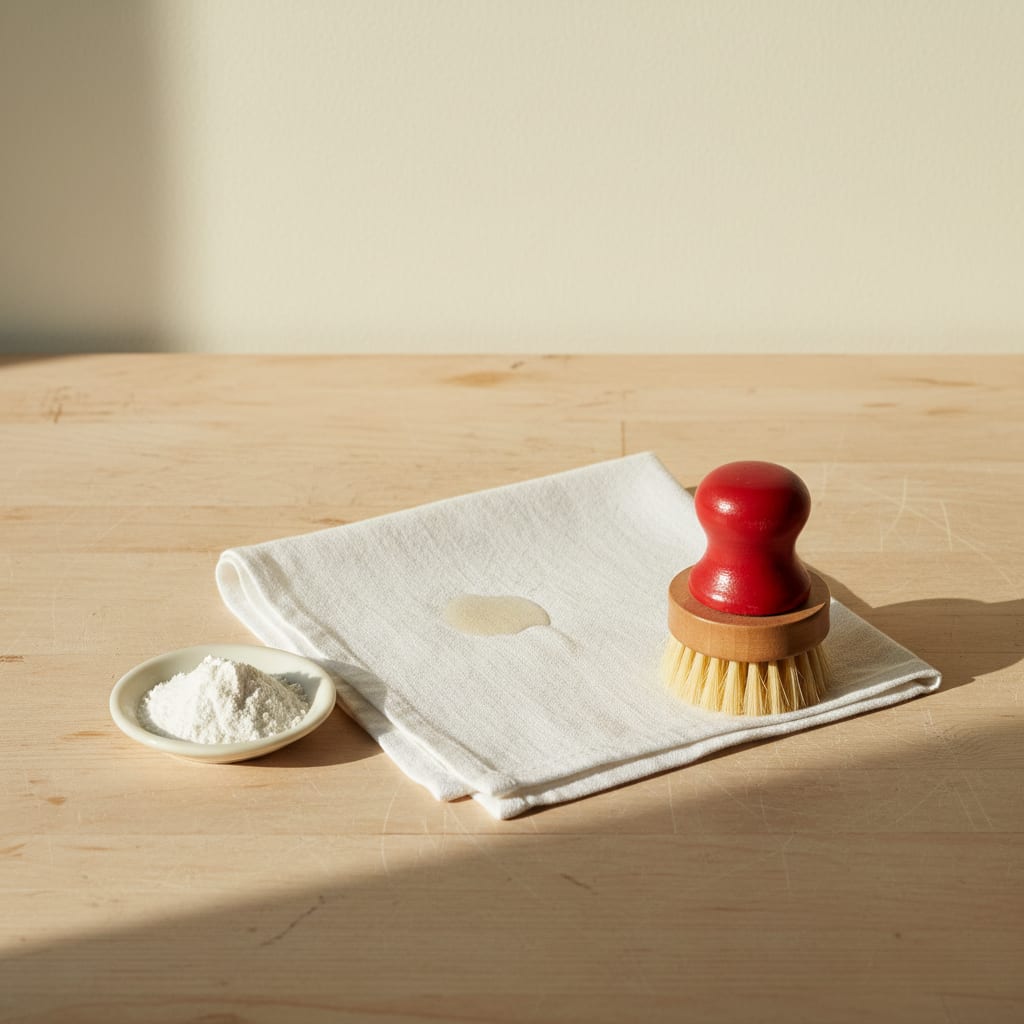
- Blot, don’t rub. Press a paper towel on both sides of the fabric to soak up the excess oil, as Tide suggests. Rubbing pushes it further in. If there is a lot of it, a shake of cornstarch on the spot for ten minutes is the card-file trick for drawing the oil out before the soap. Brush it off before the next step.
- Check the label. It tells you the hottest water the garment will take and whether it can be washed at all. New Mexico State University’s stain guide says to use only a dry-cleaning agent on “dry clean only” fabrics, or to take them to a dry cleaner.
- Work in dish soap. A few drops of clear dish soap such as Dawn Original, worked gently into the spot with a fingertip or a soft old toothbrush. Liquid laundry detergent rubbed straight on works too. Tide says to saturate the area and leave it a few minutes.
- Wash it straight away, soap and all. Tide’s grease method puts the garment in without rinsing off the pretreat, on the hottest wash the label allows.
- Use the right heat for the fabric. NMSU spells out what “hottest safe” means: “very hot for cotton and linen, hand-hot for synthetics such as nylon, and just warm for woolens.”
- Check before the dryer. Hold the spot up to a window while it is still damp. If you can see a darker shadow, repeat the steps. Tide’s rule is to repeat “before tossing in the dryer, as drying will set the stain.” Let it air-dry until you are sure. Our line-drying card is where it hangs while you wait.
Test any treatment on an inside seam or hem first. NMSU advises it for every stain method, and pretreatments can change the colour of some dyes.
Set-in grease: the old stain in the back of the drawer
The shirt that went through the dryer with a spot on it is not lost, but it needs patience. Tide’s method for “dried, set-in oil stains”:
- Blot clear dish soap into the stain and let it sit about ten minutes.
- Rinse, then soak in warm or hot water for another half hour.
- Machine wash with detergent at the warmest temperature the label allows.
- Repeat if it is still there, and air-dry it.
Two or three rounds is normal for a stain that has been baked in. If washing still has not removed it, NMSU’s next step is to let the garment dry, sponge the stain with a grease solvent, and “air the garment to remove any solvent fumes.” Do that outdoors or by an open window. Keep the solvent away from children and flames, and never put a solvent-damp garment in the dryer.
Chlorine bleach is not a grease remover. NMSU lists a half-and-half bleach mix only as a harsh last resort, for colour-fast whites, because it can harm the fabric.
Grease stains by source
The method is the same. What changes is how much grease there is and what else comes with it.
| Stain | First move | Then |
|---|---|---|
| Butter, cooking oil, salad dressing | Blot, cornstarch if heavy | Dish soap, hottest safe wash |
| Pizza and bacon grease | Scrape any food off | Dish soap, check before drying |
| Bike chain or car grease | Blot, then detergent | Pretreat soak, repeat; may need a solvent |
| Lip balm, sunscreen, diaper cream | Scrape off the excess | Dish soap; see the stain chart for sunscreen’s orange cast |
| Candle wax | Freeze and scrape first | The candle wax card has the full method |
| Tree sap | Freeze, then alcohol | The sap card has the full method |
Motor oil is the hard one. Tide’s guide notes that it carries other contaminants and “may require professional treatment.” For motor oil and other tough oil stains, Tide’s method is a soaking solution of detergent to pretreat the garment before washing. Wash those clothes on their own, not with the baby’s things.
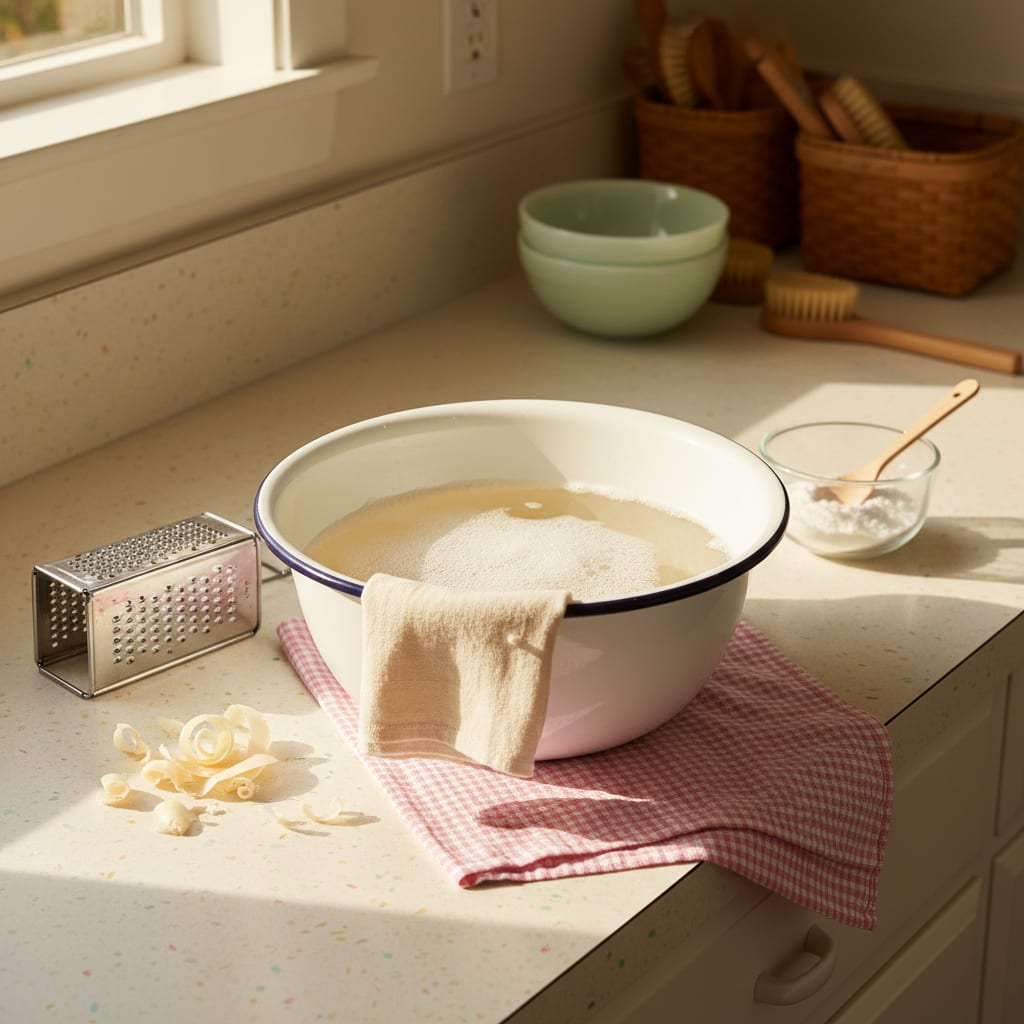
A dampened bar of laundry soap rubbed straight onto the spot, then into the boil wash with the tea towels.
A drop of dish soap from the kitchen sink the moment it happens, the hottest wash the label allows, and a look at the window before anything goes in the dryer.
The rules that save the garment
- Never the dryer while the stain is there. Tide says drying sets the stain, and Texas A&M’s stain guide says to never dry a stained garment in the dryer.
- One remover at a time. NMSU says not to mix stain removers (“especially ammonia and chlorine bleach”) and to rinse thoroughly between them.
- Gentlest method first. Soap before solvent, solvent before bleach.
- Work in a ventilated room, and keep the stain kit locked up and out of children’s reach, as NMSU advises.
FAQ: grease stains on clothes
What is the best thing to get grease out of clothes?
Clear dish soap or liquid laundry detergent, worked into the stain and left a few minutes, then a wash in the hottest water the label allows. Tide and NMSU both treat grease with soap or detergent.
Does vinegar remove grease stains?
Tide lists white vinegar among home remedies for oil, but dish soap does the main work. Test vinegar on a seam first, and never use it in the same treatment as bleach.
Can you get a grease stain out after it has been dried?
Often, yes. Tide’s set-in method is dish soap for ten minutes, a half-hour warm soak, then a wash, repeated as needed. NMSU adds a grease solvent if washing alone fails.
Does hot or cold water remove grease?
Hot, within the care label. Grease is the exception to the cold-water rule for protein stains. NMSU says very hot for cotton and linen, hand-hot for synthetics and warm for wool.
Sources loaded and read on 2026-11-27: Tide, How to Remove Grease Stains (200, 145KB); Tide, How to Get Oil Stains Out of Clothes (200, 215KB); New Mexico State University Extension, Guide C-502 Removing Stains From Clothing (PDF, 200, 789KB); Texas A&M AgriLife Extension, Quick Stain Removal Guide (PDF, 200, 137KB). Maytag’s grease guide returned 403 and was not used. Cornstarch as an absorbent is a card-file habit, not from these sources.
More cards under Laundry & Linens in the file.